Beginner English (A1)
Start from zero: say hello, talk about your day, order, shop and find your way — step by step, with lots of practice.

- A1CEFR level · Beginner
- 24lessons in 6 modules
- about 21 hof lessons
- Every lessonhas homework
What you'll be able to do
- Introduce yourself and talk about your family and home
- Describe your day, order food and buy things
- Find your way, travel and talk about last weekend
What every lesson includes
- Warm-up — A few questions to get you thinking about the topic.
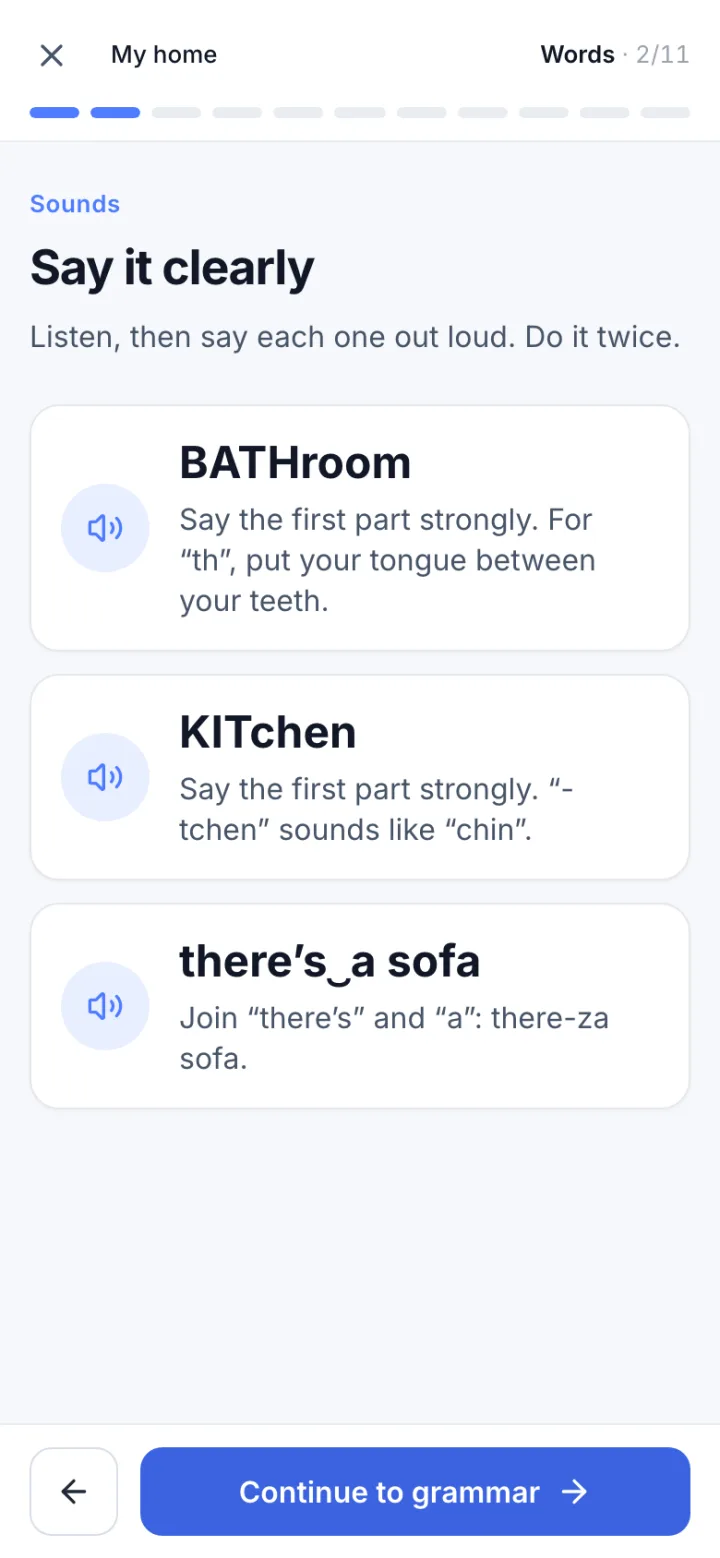
- Words and phrases — Clear meanings, real examples and audio. Save anything to My Words.
- Grammar — Small steps with examples and a quick check.
- Listening and reading — A conversation to listen to and a text to read that use the new language.
- Practice — Mixed questions with feedback on the exact answer you chose.
- Speaking — Record your answer, play it back and compare it with an example.
- Real-life task — Put it together in a situation you'll actually meet.
- Writing — A short piece of writing using what you've just learned.
- Review — A quick recap before you move on to the next lesson.
After every lesson there's homework with vocabulary, grammar, writing and speaking tasks.
Skills you practise
- Vocabulary
- Grammar
- Reading
- Listening
- Speaking
- Writing
Modules and lessons
All 24 lessons, grouped into 6 modules. Each lesson has one clear goal.
Module 1Hello!
Say hello, introduce yourself and the people in your life.
- Lesson 1 Free previewHello, I’m…
Say hello, introduce yourself and ask someone’s name.
I’m · you’re (I am · you are) · my · your · What’s your name? · How are you?
- Lesson 2 Free previewWhere are you from?
Say where you and other people are from.
he’s · she’s · it’s · we’re · they’re · Are you…? — Yes, I am. / No, I’m not.
- Lesson 3Spell it, please
Give and check personal details: name, phone number, email, age.
What’s your …? · numbers 0–100 · How old are you? — I’m … years old. · isn’t · aren’t
- Lesson 4My family
Talk about the people in your family.
Possessive ’s: Ana’s brother · his · her · our · their · Who’s this? — This is my …
Module 2Things and places
Name everyday things and describe your home and town.
- Lesson 5What’s this?
Name everyday things and ask what they are.
a · an · this · that · these · those · Plurals: keys · glasses · people · children
- Lesson 6My things
Describe what you have.
I have · she has · Do you have…? — Yes, I do. / No, I don’t. · Adjective + noun: a big black bag
- Lesson 7My home
Describe your home and where things are.
there’s · there are · in · on · under · next to · there isn’t / there aren’t
- Lesson 8In my town
Say what is in your town and where.
Is there a …? — Yes, there is. / No, there isn’t. · Are there any …? · near · opposite · between
Module 3My day
Tell the time and talk about your day and other people’s.
- Lesson 9What time is it?
Tell the time and say when things happen.
It’s … o’clock · half past · quarter past · quarter to · at + time · on + day · When is it open? — From nine to five.
- Lesson 10My day
Say what you do every day and ask someone about their day.
I · you · we · they + verb · don’t · Do you…? · What time do you…?
- Lesson 11Her day
Talk about someone else’s job and routine.
he / she + -s: she works · doesn’t · Does she…? · always · usually · sometimes · never
- Lesson 12Dates and birthdays
Say and ask about dates and birthdays.
in + month: in May · on + date: on 3 May · first · second · third · twentieth
Module 4Free time, food and shopping
Say what you like, order food and buy clothes.
- Lesson 13What do you like?
Talk about free time and what you like.
like · love · don’t like + noun · like + -ing: I like cooking · it · them: I love it
- Lesson 14Food and drink
Say what you eat and drink.
a · an: an apple, a banana · some: some bread, some eggs · What do you have for breakfast? · Do you like …?
- Lesson 15At the café
Order and pay in a café.
I’d like … · Can I have …? · Would you like …? — Yes, please. / No, thank you. · How much is it? — It’s …
- Lesson 16Shopping for clothes
Ask about clothes, sizes and prices.
How much is this …? · How much are these …? · Can I try it on? · try them on · too big · too small
Module 5People and right now
Describe people, say what you can do and what is happening now.
- Lesson 17What does she look like?
Describe what people look like.
She’s tall · He’s young · She has long hair · He has a beard · What does he look like?
- Lesson 18I can swim
Say what you can and can’t do.
I can · I can’t · Can you…? — Yes, I can. / No, I can’t. · well · a little · not at all
- Lesson 19What are you doing?
Say what is happening right now.
I’m …-ing · you’re …-ing · he’s / she’s / they’re …-ing · not · What are you doing? · every day or right now?
- Lesson 20What’s the weather like?
Talk about the weather and what to wear.
It’s sunny · It’s cold · It’s raining · It’s snowing · What’s the weather like? · in summer
Module 6Out and about
Find your way, travel, and talk about last weekend.
- Lesson 21How do I get to…?
Ask for and follow simple directions.
turn left · go straight on · don’t + verb: Don’t turn right · It’s on the left / on the corner / opposite …
- Lesson 22Tickets and hotels
Buy a ticket and check in at a hotel.
What time does the train leave / arrive? · I’d like a single / a return to … · I have a reservation. · Can I …?
- Lesson 23Last weekend
Say where you were and what your weekend was like.
I was · it was · they were · yesterday · last … · on Saturday · went · had · saw (as phrases)
- Lesson 24Final A1 challenge
Use everything in one real day out.
Review: be · have · there is · present simple · Review: can · present continuous · was / were · Review: questions you need on a day out
How access works
Lessons 1 and 2 of every course are a free preview for anyone signed in to Fluentra — creating an account is free. From Lesson 3, a course needs full access: choose Request full access in the app, and once your access is active you can continue through the rest of the course.
Vocabulary in your language
The vocabulary in every lesson can be translated into your own language — Fluentra supports 20 languages, including Armenian. The courses themselves are taught in English; words without a written translation are translated automatically.
Related guides
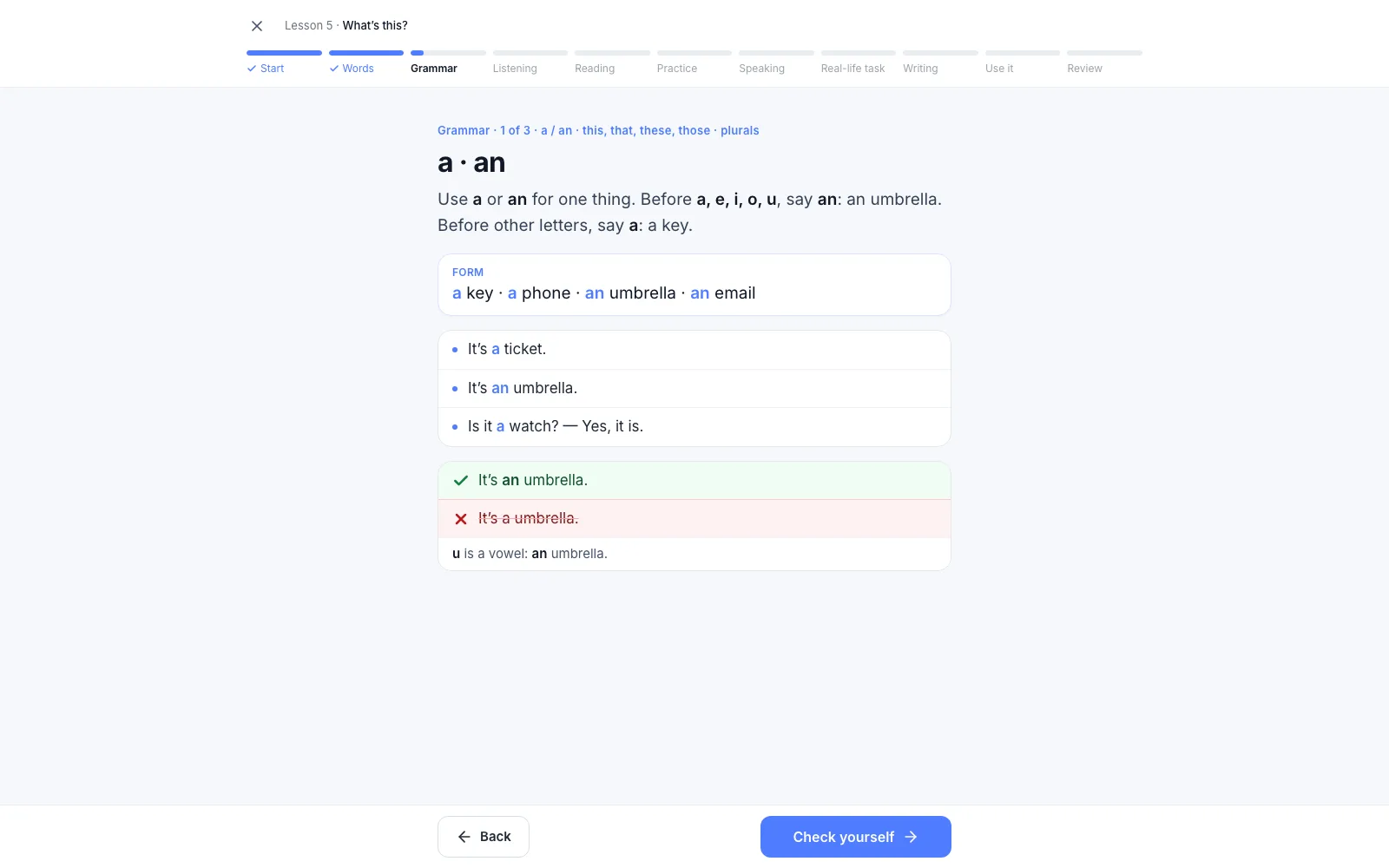
Articles in English: When to Use A, An, The (and No Article)
A, an and the are the most common words in English, and some of the easiest to get wrong. Here are the rules that cover almost every sentence — and the few exceptions worth learning.
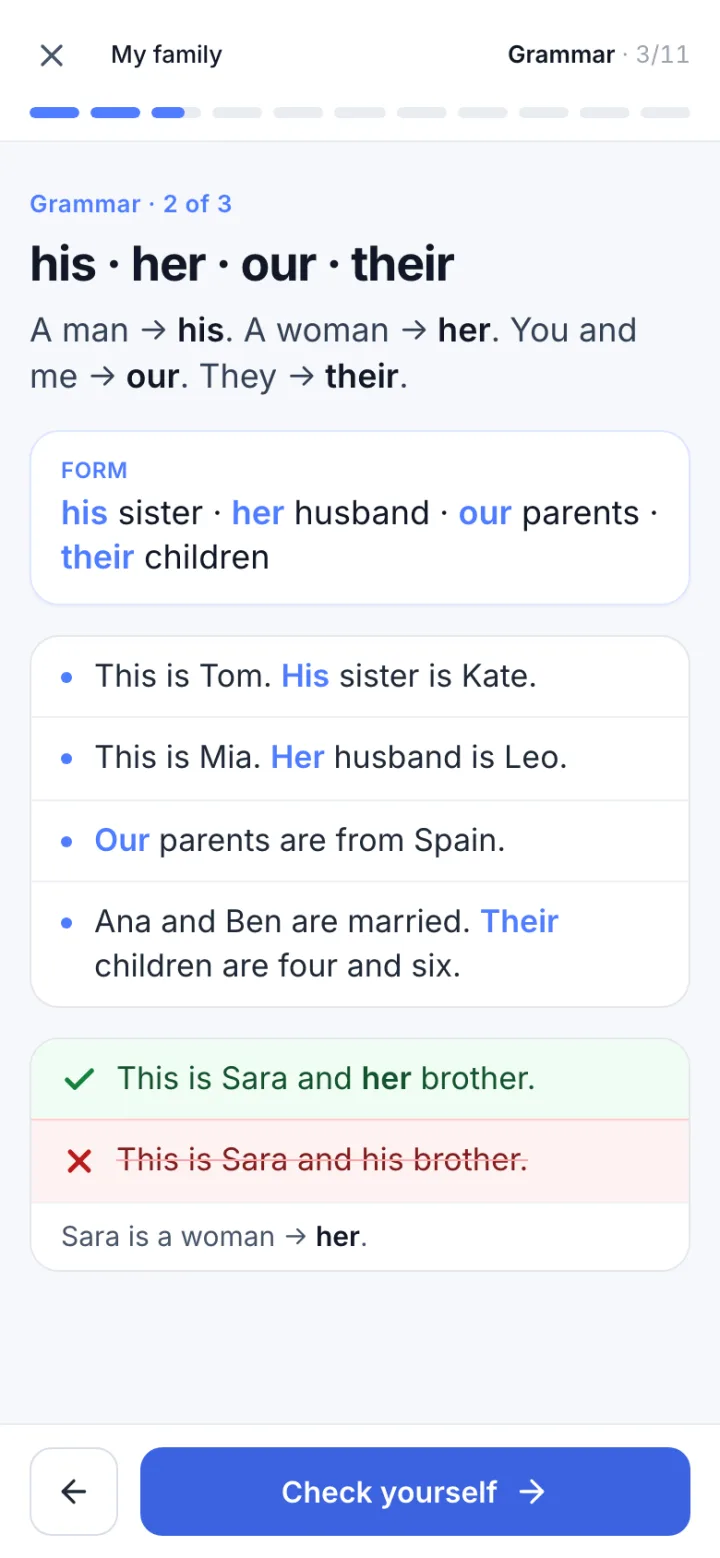
Parts of Speech in English: The 8 Types, With Examples
Every word in a sentence has a job. Learn the eight parts of speech, how to spot each one, and why the same word can be a noun in one sentence and a verb in the next.
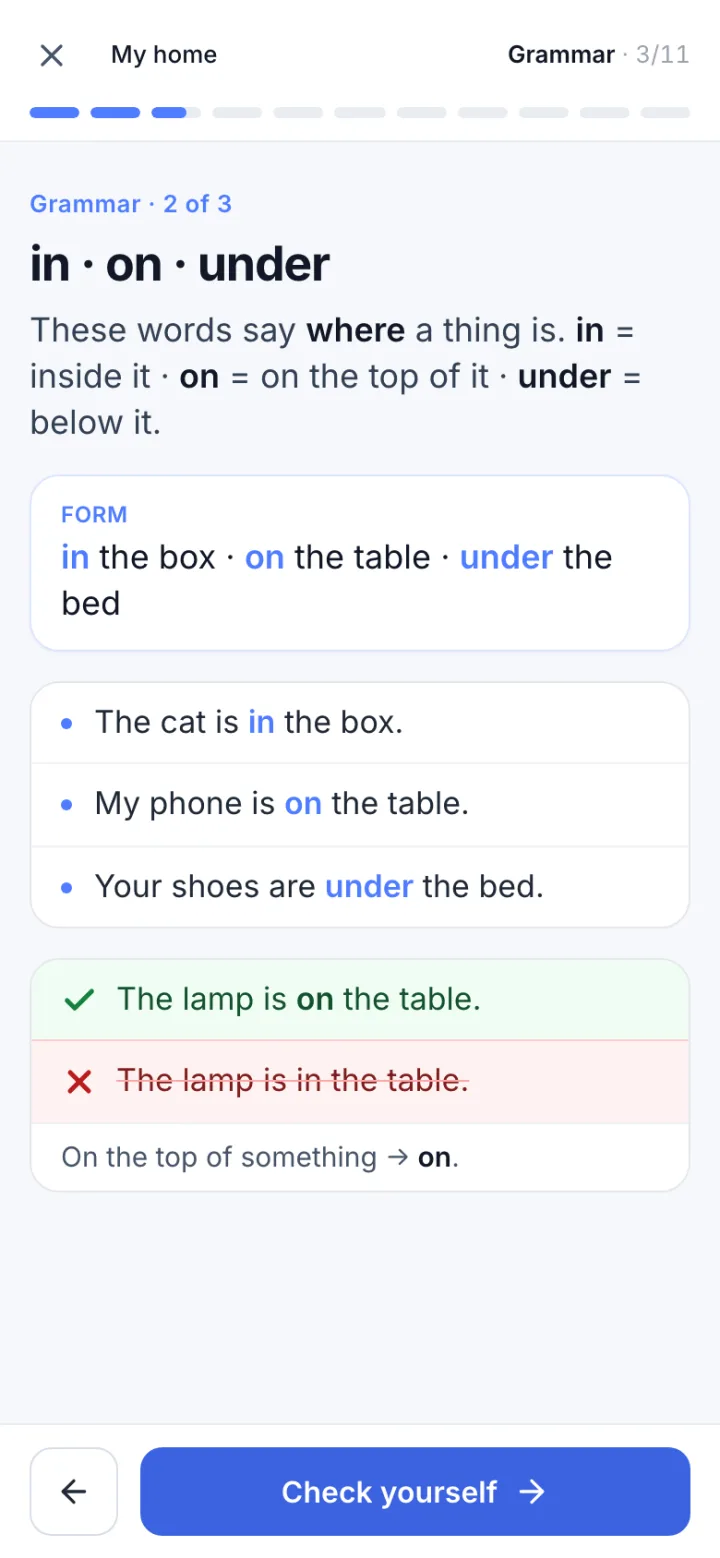
Prepositions in English: Place, Time and the Ones People Get Wrong
In, on, at, under, between: short words that cause long arguments. Here are the rules for place, time and movement, the most common prepositions, and the fixed combinations you simply have to learn.
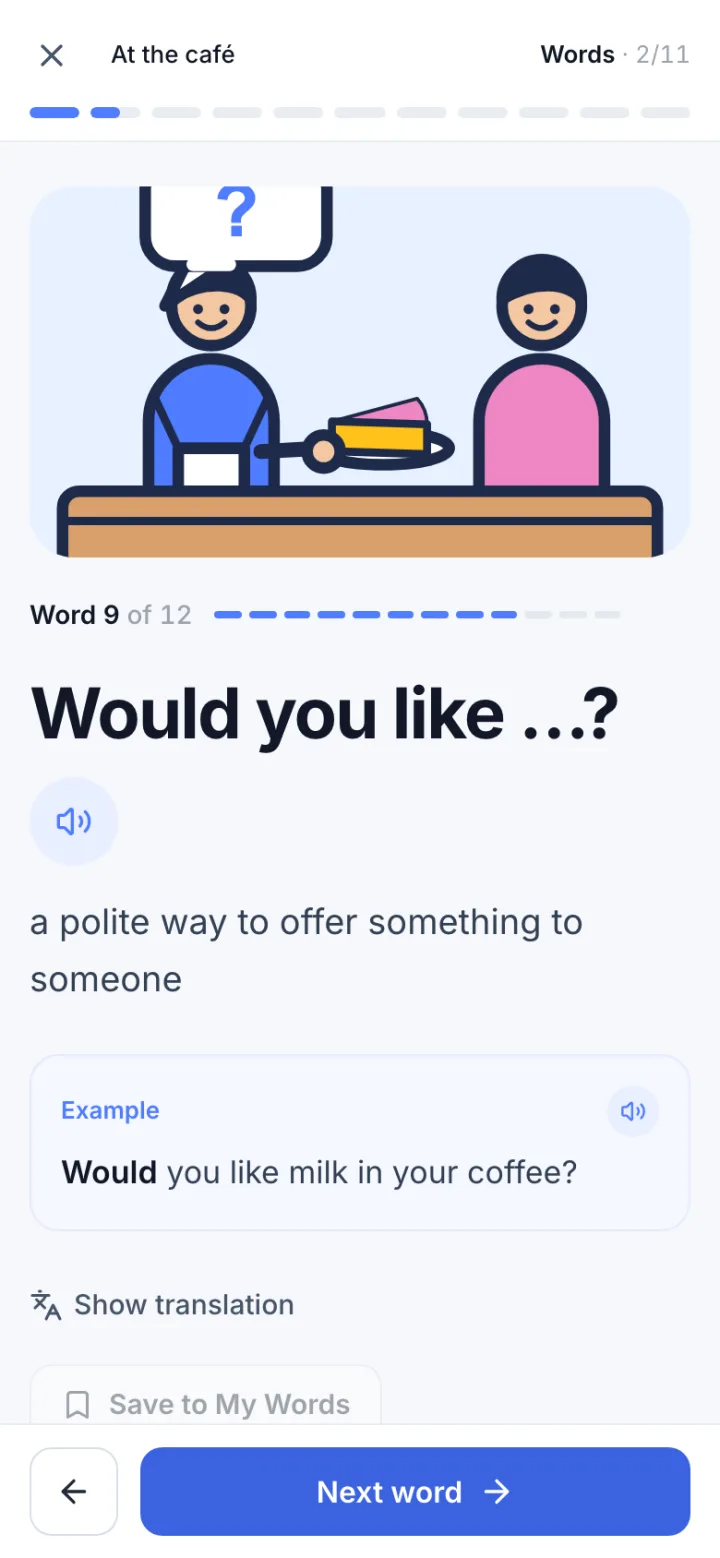
100 Daily Use English Sentences for Real-Life Situations
You don't need thousands of words to get through a day in English. These 100 sentences, grouped by situation, cover greetings, cafés, shops, directions, work and small talk.
Homophones in English: Meaning, 40+ Common Pairs and Mix-Ups
Sea and see. Right and write. Their, there and they're. Homophones sound the same but mean different things — here's how to tell them apart when you listen and when you write.